Yoga
 BY Arora Indu4 min read • November 16, 2018
The answer to the question 'What is yoga?' is not limited to one person, one text or one single interpretation. It is as many meanings as many people are asked this question. It is the most widely understood as well as misunderstood word in Sanskrit.
What is Yoga?
The answer to this question is not limited to one person, one text or one single interpretation. It is as many meanings as many people are asked this question. It is the most widely understood as well as misunderstood word in Sanskrit.
Even though the meaning could be anything and everything, there is a value in knowing what was the original intent behind calling this philosophy yoga.
Every syllable in Sanskrit has at least 20 possible meanings. Based on the root the word originates from, or the context the meaning changes.
The word, or may I say the mantra, 'yoga' is made up of 4 seed sounds: y for yung, o for ung, g for gung and the silent double colon for aha.
Each syllable is a state of realization of the state called yoga / yogah.
Yung represents the cyclic motion of the inspiratory and expiratory breath.
Ung represents the stability at 3 levels: body (as asana), breath (as prayanayam) and senses (as pratyahara).
Gung represents the focus, concentration, the rising the pranas, the meditation.
Aha represents the merging, the expansion and the dissolution. The experience, the realization, the becoming which is known as Samadhi.
By realizing the four seed sounds, one becomes yoga. It is not merely in knowing, reading, memorizing the meaning that yoga dawns upon us. It is hard, sincere and dedicated work. It is a choice that we make at any given moment. It is not merely the mimicking and posing. It is not merely the repetition of the mantra. It is not just singing the chants of Bhakti. It is also not intellectual argumentativeness.
May our understanding of Yoga change as we change, may we be ready for this change. May we know that in changing we are not being unstable but we rise.
Let that stable anchor point be within us as the inner light of consciousness and not in our limited views on what is Yoga.
May we live our Yoga.
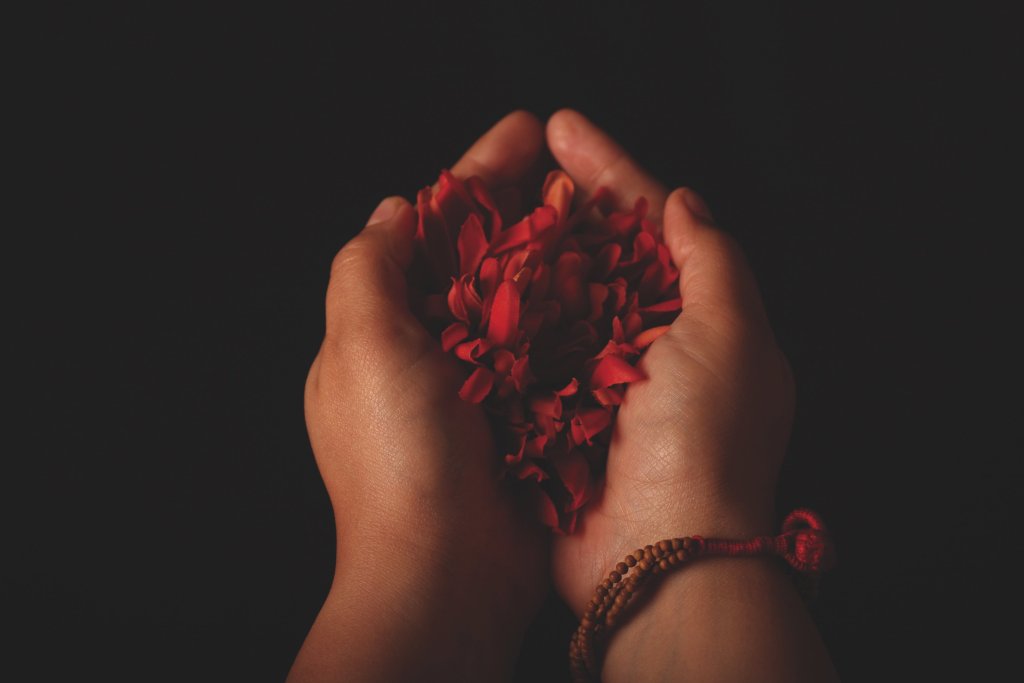
I am excited to share about a very precious mala what I designed very recently. The mala is based on the philosophy of rise beyond the three guans, dedicated practice along with surrender and the four seeds sounds of the mantra Yoga. For me it is a living philosophy to what is yoga. Yoga Shri Mala, find it here
to get more on Yoga and Ayurveda here
Say hello on Instagram
Subscribe to my Youtube Channel.